

Catholic laity are the ordinary members of the Catholic Church who are neither clergy nor recipients of Holy Orders or vowed to life in a religious order or congregation. Their mission, according to the Second Vatican Council, is to "sanctify the world".
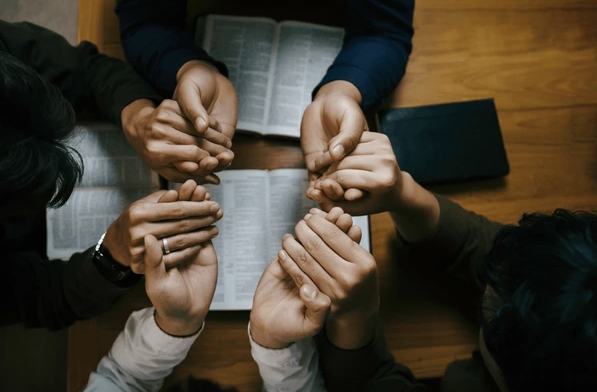
The laity forms the majority of the estimated over one billion Catholics in the world.
The Catholic Church is served by the universal jurisdiction of the Holy See, headed by the Pope, and administered by the Roman Curia, while locally served by diocesan bishops.
The Pope and the bishops in full communion with him are known collectively as the Catholic hierarchy, and are responsible for the supervision, management, and pastoral care of all members the Catholic Church, including clergy, religious, and laity.
But since the Second Vatican Council of Bishops (1962–1965) the laity have emerged as a greater source of leadership in various aspects of the church's life; and its teaching on their equal call to holiness has led to greater recognition of their role in the church.
Whereas the word faithful is opposed to infidel, unbaptized, one outside the pale of Christian society, the word laity is opposed to clergy.
The laity and clergy, or clerics, belong to the same society, but do not occupy the same rank. The laity are the members of this society who remain where they were placed by baptism, while the clergy, even if only tonsured, have been raised by ordination to a higher class, and placed in the sacred hierarchy.
The Church is a perfect society, though all therein are not equal; it is composed of two kinds of members (see can. "Duo sunt", vii, Caus. 12, Q. i, of uncertain origin): in the first place, those who are the depositaries of sacred or spiritual authority under its triple aspect, government, teaching, and worship, i.e. the clergy, the sacred hierarchy established by Divine law (Conc. Trid., Sess. XXIII, can. vi); in the second place, those over whom this power is exercised, who are governed, taught, and sanctified, the Christian people, the laity; though for that matter clerics also, considered as individuals, are governed, taught, and sanctified. But the laity are not the depositaries of spiritual power; they are the flock confided to the care of the shepherds, the disciples who are instructed in the Word of God, the subjects who are guided by the successors of the Apostles towards the last end, which is eternal life. Such is the constitution which Our Saviour has given to His Church..